Opinion
Barr. Adum: A Citizen Dies In A Minister’s Residence – And The Republic Is Silent

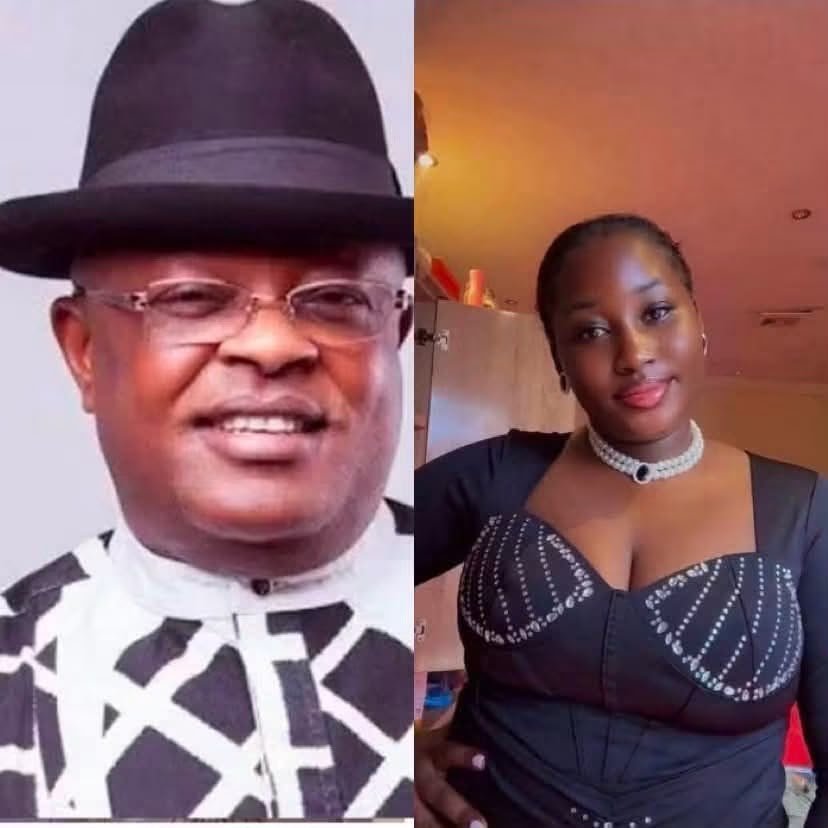
Opinion: Barr. Adum: A Citizen Dies In A Minister’s Residence – And The Republic Is Silent
Mary Habila is dead.
She was reportedly found dead in the residence of Nigeria’s Minister of Works, David Umahi. Police investigators, according to media reports, have refused requests by the Minister’s lawyers to release her body for burial, insisting that the matter remains under active investigation and that an autopsy and other forensic procedures are indispensable. Reports have also suggested that investigators are questioning aspects of the public explanation already offered by the Minister.
If these reports are accurate, one question towers above every other: why has the Nigerian Government chosen silence?
*Where is President Bola Ahmed Tinubu and what is he saying about this, because as president he swore under oath to protect every citizen?*
*Where is the All Progressives Congress, because as a political party and the incumbent for that matter it ought to act as a moral compass on the public good to the nation?*
*Where is the official outrage that should accompany the unexplained death of a citizen in the residence of one of the most powerful men in government?*
In every democracy that takes human life seriously, such an incident would trigger immediate assurances of transparency, institutional independence, and accountability. Here, the silence is deafening. It sends a dangerous message that the political class may be insulated from the standards expected of ordinary Nigerians.
David Umahi should immediately step aside as Minister of Works, not because he has been found guilty of any offence, but because the integrity of the investigation must be beyond question. No minister whose residence is the scene of an unexplained high crime like death should continue to occupy high office while investigators are still trying to establish the facts. Public confidence demands nothing less.
The contrast in law enforcement priorities is impossible to ignore. The state can mobilise extraordinary speed and determination when pursuing allegations of ordinary misdemeanor against citizen Sowore, or political offences against opposition. Yet where a Nigerian has lost her life under circumstances still being investigated, the same urgency appears absent from those entrusted with protecting the public interest.
This is not merely about one minister. It is about the moral compass of a government. What message does it send when allegations involving paperwork provoke swift official action, but the unexplained death of a citizen in the residence of a serving cabinet minister is met with official silence?
The issue before Nigerians is larger than personalities. It is whether public office has become a sanctuary from scrutiny. It is whether political power now determines the intensity of criminal investigations. It is whether the poor and powerless are entitled to the same justice as the influential and connected.
Mary Habila’s life mattered.
Her family deserves the truth. Nigerians deserve the truth. The investigation must proceed without fear, favour, intimidation, or political interference. Every forensic procedure must be completed, every witness heard, and every relevant fact made public.
History teaches that nations do not collapse only because of corruption. They also decay when human life ceases to command the highest value in public affairs.
President Tinubu now faces a defining test. He can demonstrate that under his administration no public official is beyond scrutiny, or he can reinforce the growing perception that power is a shield against accountability.
Nigeria cannot claim to be governed by the rule of law if justice hesitates whenever it approaches the gates of power.
Mary Habila deserves the truth. The Republic owes her nothing less.
*Alex Ter Adum, PhD*
DDG THE NARRATIVE FORCE

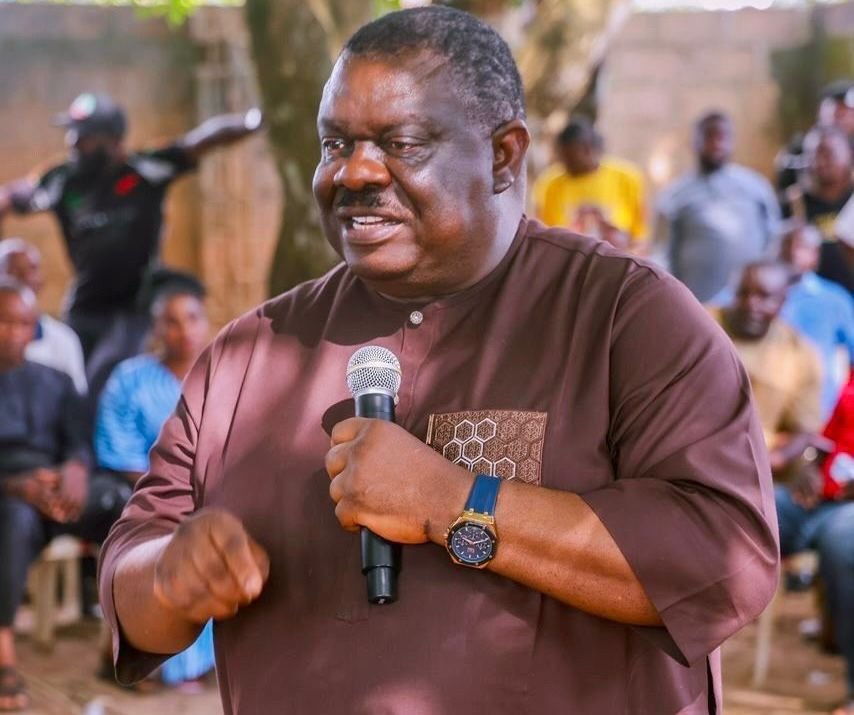
By Terver Akase, PhD
As Benue State prepares for the 2027 governorship election, one question dominates public discourse: who has the ideas, experience and courage to confront the twin crises of insecurity and economic decline that have crippled the state?
For Chief Michael Kaase Aondoakaa, SAN, the Peoples Democratic Party (PDP) governorship candidate, the answer lies not in slogans or political grandstanding, but in practical, carefully thought-out policies that address the root causes of the challenges facing Benue and Nigeria.
During a recent appearance on Arise News, the former Attorney General of the Federation and Minister of Justice laid out his views on two of the most contentious issues in the country today: ranching and State Police. What emerged from the interview was not merely a politician expressing opinions, but a statesman demonstrating a deep understanding of the security and economic realities confronting the nation.
Ranching: Turning a Security Challenge into an Economic Opportunity
For years, unprovoked attacks by terrorists on farmers have claimed thousands of lives, displaced communities and devastated agricultural production across Benue State and other parts of Nigeria. While many political leaders have treated ranching largely as a security issue, Aondoakaa approached it from both a security and economic perspective.
His position is clear: ranching is the future of livestock production, but government should not become a ranch owner. Instead, government should create the conditions that enable private investors to establish and manage ranches profitably.
This distinction is significant.
Aondoakaa argues that livestock ownership is fundamentally a private business, just like rice farming, poultry production or fish farming. Therefore, rather than using public funds to establish ranches for private cattle owners, government should focus on providing infrastructure, financing, improved cattle breeds, irrigation facilities and other support systems that make ranching commercially viable.
His proposal reflects a market-driven approach that encourages investment while avoiding the controversies often associated with government-led ranching schemes.
More importantly, it addresses one of the major fears expressed by farming communities across Benue and other states: the fear that public ranching initiatives could eventually become vehicles for land acquisition or land grabbing.
Aondoakaa believes private ranching offers a more transparent and sustainable alternative.
Under his model, livestock entrepreneurs would negotiate directly with communities and landowners through voluntary commercial arrangements. Ranch operators could acquire or lease land legally, while local farmers would benefit economically by producing specialized grass, fodder and other feed supplies needed by ranches.
This approach creates a new agricultural value chain capable of generating employment, increasing incomes and stimulating rural economies.
In essence, Aondoakaa sees ranching not merely as a security intervention but as a business ecosystem that can create wealth for both livestock owners and crop farmers.
His emphasis on cattle improvement further demonstrates his understanding of modern livestock economics. According to him, Nigeria must move beyond traditional cattle-rearing methods and invest in crossbreeding programmes that produce animals with higher milk and meat yields.
The logic is straightforward: if livestock owners can earn more from fewer animals through improved productivity, the pressure for open grazing diminishes significantly.
Coupled with affordable financing at single-digit interest rates, such reforms could transform livestock production into a highly profitable private-sector enterprise.
It is a solution that seeks to replace conflict with commerce, suspicion with partnership, and underdevelopment with productivity.
State Police: A Practical Response to Nigeria’s Security Crisis
If ranching represents Aondoakaa’s economic solution to one dimension of insecurity, his position on State Police reflects his understanding of the structural weaknesses within Nigeria’s security architecture.
For decades, Nigeria has relied almost exclusively on a centralized policing system despite growing population pressures, expanding criminal networks and increasingly complex security threats.
The result has been obvious: overstretched security personnel, slow response times and insufficient local intelligence.
Aondoakaa is among those who believe the time has come for a new approach.
His support for State Police is not rooted in political fashion or contemporary pressure. Rather, it is informed by his direct involvement in constitutional reform efforts during the administration of late President Umaru Musa Yar’Adua, when State Police was first seriously proposed as part of broader institutional reforms.
His argument is simple: the Federal Police can no longer effectively police a country as large and diverse as Nigeria on its own.
For communities in Benue State that continue to endure violent attacks, killings, kidnappings and displacement, the need for security institutions that understand local terrains, languages, cultures and intelligence networks has become increasingly urgent.
State Police, in Aondoakaa’s view, can help bridge this gap.
However, unlike many advocates who stop at supporting the concept, Aondoakaa goes further by identifying the safeguards necessary to make State Police effective and accountable.
He warns that recruitment must be protected from political interference. Allowing politicians to populate State Police formations with loyalists, thugs or political enforcers would undermine public confidence and defeat the purpose of the reform.
His insistence on professionalism demonstrates an understanding that effective security institutions depend not merely on structures but on the quality and integrity of personnel.
Similarly, he advocates a regulated framework for arms procurement, arguing that the acquisition of weapons should not become a free-for-all among states. Instead, a coordinated federal oversight mechanism should ensure standardization, accountability and national security coherence.
This reflects a balanced approach, an approach that supports decentralization without sacrificing national security interests.
His call for stronger judicial oversight further highlights a commitment to the rule of law. By ensuring that magistrates and judicial officers retain sufficient independence, State Police operations can remain subject to legal scrutiny and constitutional safeguards.
Taken together, these recommendations reveal a leader thinking beyond headlines and considering the practical details required to make reforms succeed.
Perhaps the most striking aspect of Aondoakaa’s positions is that they are rooted in problem-solving rather than political rhetoric.
On ranching, he proposes a model that protects communities, encourages investment, expands agricultural productivity and reduces conflict.
On State Police, he advocates a security structure capable of improving protection for citizens while incorporating safeguards against abuse.
Both positions reflect a broader philosophy of governance: government should create opportunities, strengthen institutions and empower citizens rather than dominate economic activity or centralize every solution.
Chief Michael Kaase Aondoakaa’s interventions on ranching and State Police suggest a leader who understands not only the nature of the problems but also the practical pathways towards solving them.
For many Benue people searching for answers to the challenges confronting their communities, that may be the most important qualification of all.
By Abraham Mande
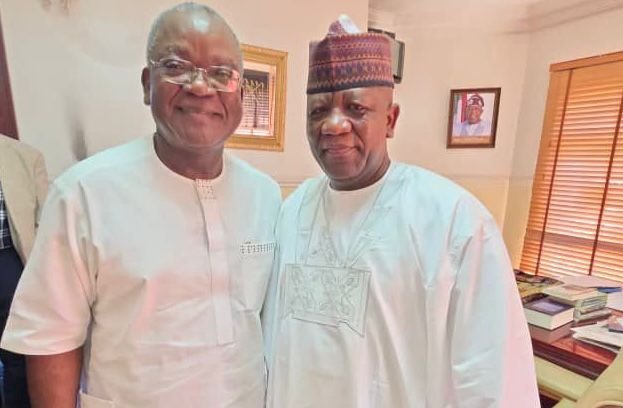
The political significance of the courtesy visit by the immediate past Governor of Benue State and Leader of the Peoples Democratic Party (PDP) in the state, Chief Samuel Ortom to former Governor of Zamfara State and Director General of the Tinubu/Shettima 2027 Campaign Council, Senator Abdulaziz Yari, cannot be dismissed as an ordinary meeting between political allies.
It is a development that offers a glimpse into the evolving political architecture ahead of the 2027 general elections and, more importantly, provides compelling evidence that President Bola Ahmed Tinubu’s support base in Benue State is expanding beyond the traditional boundaries of the All Progressives Congress (APC).
Politics is ultimately about building alliances, and the politicians who win elections are often those who understand that electoral success is determined not merely by party labels but by the ability to assemble broad coalitions of interests, influence and grassroots structures. That process appears to be unfolding before our eyes.
Chief Samuel Ortom has never hidden his support for President Tinubu for 2027. Shortly after the President assumed office, the former Benue governor, while speaking at a public event in Port Harcourt, endorsed Tinubu for a second term. In recent weeks, Ortom reaffirmed that endorsement, aligning himself with the position championed by the Minister of the Federal Capital Territory and National Leader of the PDP, Chief Nyesom Wike who has consistently argued that national interest should take precedence over blind partisan considerations.
The Abuja meeting with Senator Yari therefore carries strategic implications. Yari occupies one of the most critical positions in the Tinubu re-election project as Director General of the Tinubu/Shettima 2027 Campaign Council. Any engagement between him and Ortom naturally attracts attention because both men command substantial political structures and enjoy considerable influence within their respective constituencies.
For Benue State, the implications are profound.
Chief Ortom remains arguably one of the most influential political leaders in the state. His political network cuts across local government areas, wards and polling units. Even after leaving office, he continues to exercise significant influence within the PDP and among independent political actors who respect his leadership.
This means that President Tinubu is steadily attracting influential political stakeholders from outside his party, thereby creating a broader and more formidable coalition capable of delivering electoral dividends.
The emerging alliance is particularly significant because it reflects a growing convergence of interests between prominent figures in the APC and influential leaders within the PDP. What is taking shape is not merely cooperation between individuals but the gradual construction of a rainbow coalition united by a common political objective.
For President Tinubu, this development could prove decisive.
In 2023, he won the presidency despite facing stiff opposition from multiple fronts. Heading into 2027, he appears determined not only to defend his mandate but also to consolidate support in states where political divisions previously limited the APC’s reach. Benue is increasingly looking like one of those states.
The Ortom factor alone changes the political calculations. The combination of Tinubu’s incumbency, the support of Wike and his allies across the country, the organizational capacity of Senator Abdulaziz Yari, and the grassroots influence of other key political figures like Chief Michael Kaase Aondoakaa, SAN who is the PDP gubernatorial candidate in Benue State for the 2027 election, that cannot be ignored.
Those who continue to view Benue politics strictly through the lens of APC versus PDP may therefore be missing the larger picture. The battle lines for 2027 are being redrawn. Old assumptions are giving way to new realities. Political relationships that once appeared impossible are becoming increasingly practical.
The Ortom-Yari meeting is one of the clearest indications yet that the coalition supporting President Tinubu’s re-election is expanding and deepening.
In politics, elections are often won long before ballots are cast. They are won through strategic alliances such as what the PDP and the SGF, Senator George Akume-led APC are doing in Benue State, as well as the ability to bring together diverse political interests under a common banner.
That process is already underway.
And if current developments are anything to go by, President Bola Tinubu’s path to securing a stronger showing in Benue State in 2027 may have become considerably clearer.
• Mande is a public affairs analyst.
Opinion
Barnabas Agashua: Praise For Sale – Why Bayo Onanuga’s Endless Benue Project Tours Raise More Questions Than Answers
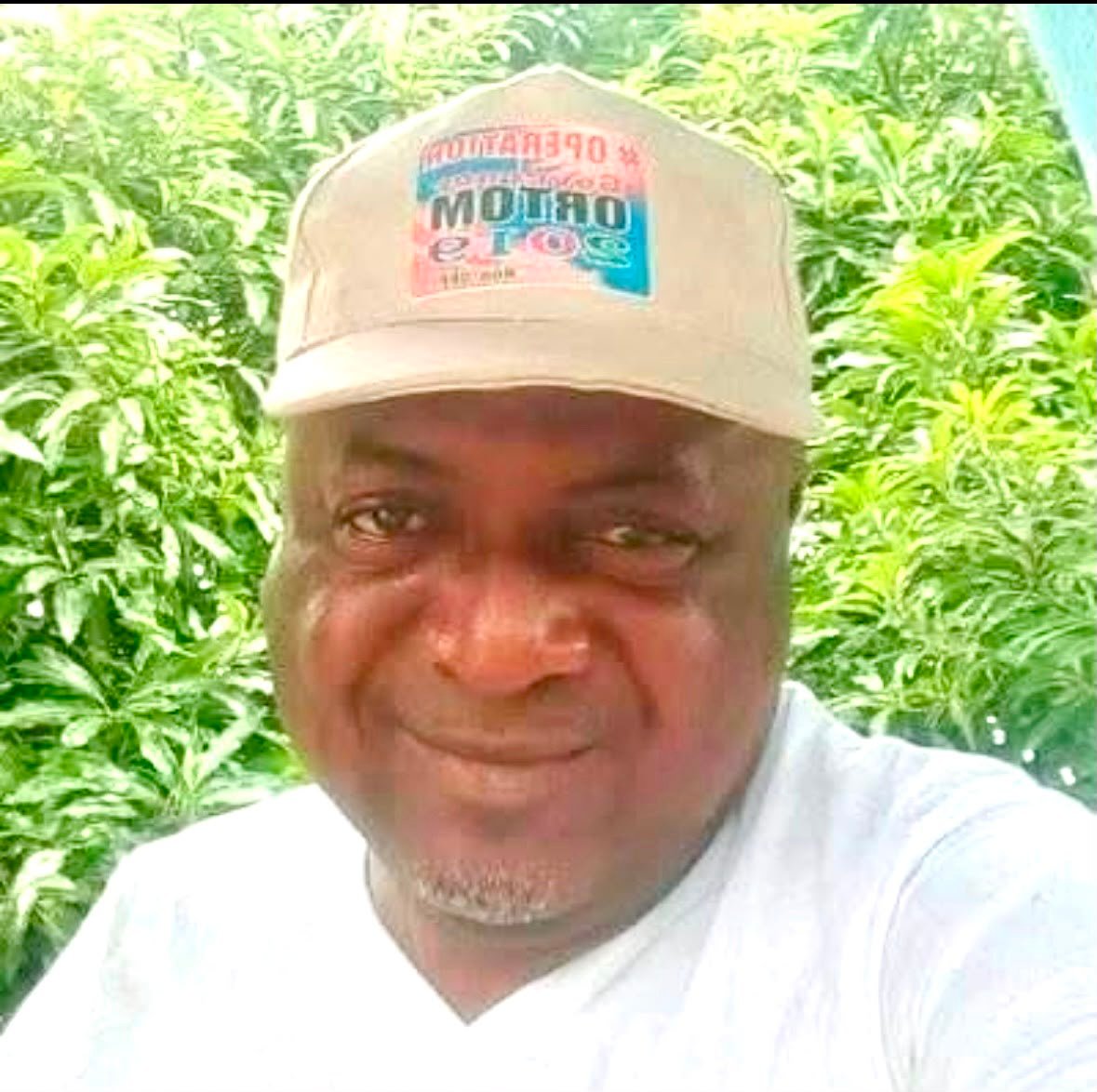
By Barnabas Agashua
Praise is ordinarily earned. But when the same team keeps returning to the same state to manufacture applause around projects that struggle to justify the celebration, citizens are entitled to ask whether praise itself has become a commodity.
We have observed with growing concern the increasingly curious frequency with which the Presidential Media Team led by the Special Adviser to the President on Information and Strategy, Mr. Bayo Onanuga, visits Benue State ostensibly to “inspect” and “showcase” projects of the Federal and Benue State Governments.
The latest visit a few days ago is the second such project inspection tour of Benue State by the Presidential Media Team in barely seven months. Only last month, Governor Hyacinth Alia was also hosted at the Presidential Villa to brief the same presidential media establishment on what were presented as the achievements of his administration.
This extraordinary attention raises legitimate questions.
Why has Benue State suddenly become the preferred destination of the Presidential Media Team for repeated project inspection tours? How many other states have received this frequency of presidential media inspection and publicity? Is it now the responsibility of presidential media aides to repeatedly tour and promote projects executed by state governments?
These questions become even more pertinent when the projects being celebrated are subjected to scrutiny.
We have no quarrel whatsoever with the Federal Government executing projects in Benue State. Projects such as the Buruku-Logo Bridge, the Wurukum Overhead Bridge, the Makurdi-Gboko federal highway and other genuine federal interventions are welcome. Benue people deserve their fair share of federal infrastructure and should indeed demand even more.
What we find curious is the attempt to bundle Federal Government projects together with projects of the Alia administration in order to create an exaggerated impression of infrastructural transformation in Benue State.
Federal projects must be credited to the Federal Government. Governor Alia must be assessed on the projects funded and executed by the Benue State Government under his watch.
Once that distinction is made, the publicity begins to look considerably less impressive.
WHERE ARE THE COMPLETED STATE PROJECTS?
Governor Alia has been in office for more than three years. During this period, Benue State has enjoyed substantially higher federal allocations following the removal of fuel subsidy and changes in national revenues.
Yet, when the First Lady of Nigeria recently visited Benue State and projects were presented for commissioning, the completed roads showcased reportedly amounted to only about 11.5 kilometres of urban streets in Makurdi.
That is the uncomfortable reality no number of media tours can obscure.
A government that has spent more than three years in office should not require repeated visits by presidential media officials to convince citizens that development is taking place. Roads, hospitals, schools, water projects, industries and other infrastructure speak for themselves.
Underpasses Are Not A Substitute For Statewide Development
The Alia administration repeatedly showcases the High-Level interchange in Makurdi and the Gboko underpass/interchange as symbols of its infrastructure record.
But Benue is made up of 23 local government areas, not two roundabouts.
The relevant questions are straightforward: What proportion of Benue communities have benefited from completed state-funded roads under the Alia administration? How many kilometres of new state roads have actually been completed and opened to traffic? How many rural roads have been constructed to enable farmers to evacuate their produce? What is the condition of township roads outside Makurdi? Where are the signature projects in education, healthcare, water supply, agriculture and industrial development commensurate with the resources available to the government?
These are the indices by which an administration should be judged, not by the number of media cameras assembled around a handful of construction sites.
Even more importantly, an interchange should solve an identifiable traffic problem and provide economic value commensurate with its cost. Infrastructure is not built merely to produce impressive aerial photographs and campaign videos.
Another disturbing feature of the latest publicity exercise is the tendency to present ongoing construction as though it were already a completed achievement.
Government must be allowed to complete its projects, but citizens must also be allowed to distinguish between a contract award, an ongoing construction site and a completed project delivering measurable benefits.
You cannot commission promises.
You cannot drive on percentages of completion.
And you cannot ask citizens to applaud infrastructure that exists principally in government press statements while construction is still ongoing.
WHAT EXACTLY IS BEING “INDEPENDENTLY ASSESSED”?
The statement announcing the latest visit says the tour involving more than 40 editors and journalists was designed to “independently assess, document and showcase” projects.
The word “independently” deserves interrogation.
An assessment cannot earn credibility merely because journalists participate in a government-organized tour. Genuine assessment should examine not only what government officials choose to showcase but also project costs, completion rates, procurement, geographical spread, value for money and the opportunity cost of the projects.
An independent assessment of the Alia administration should therefore go beyond carefully selected construction sites.
The team should travel beyond the showcase locations. It should inspect neglected roads and communities. It should ask how much the state has received since May 2023 and what measurable infrastructure those revenues have produced. It should ask why communities still complain about basic infrastructure despite the extraordinary improvement in government revenues.
That would be an assessment.
Anything less risks becoming a guided publicity tour.
Barnabas Agashua is a public affairs analyst.

Bloody Attack In Benue As Several Kill, Others Missing In Ukum LGA

Lagos: Man Bags 8 Years Imprisonment For N132m Money Laundering

Benue Closes 2 Schools Over Alleged Victimisation Of Pupils, Breach Of Textbook Policy

2027: Ex-BIPC Board Member, Chila, Wins APC Ukum State Assembly Ticket

Benue Commissioner Monitors Distribution Of Subsidised Fertiliser

NUC Approves AI, 4 Other New Tech-Focused Courses For Veritas University
-
 News5 months ago
2027: Ex-BIPC Board Member, Chila, Wins APC Ukum State Assembly Ticket
-
 News3 months ago
Benue Commissioner Monitors Distribution Of Subsidised Fertiliser
-
 Education News4 months ago
NUC Approves AI, 4 Other New Tech-Focused Courses For Veritas University
-
 Education News2 months ago
Benue Businessman Naje Awarded Scholarships To Over 200 Students
-
 News5 months ago
Tinubu’s Daughter Calls For Investigation Over Lagos APC Primaries
-
 Politics4 months ago
D-Day: APC, NDC, Other Party Candidates Fear Substitution As INEC Opens Portal
-
 Politics2 months ago
Adeleke Warns Tinubu: There Maybe Crisis If APC Rigs Me Out
-
 Health News4 months ago
Mass Wedding: 3,000 Kano Couples To Undergo HIV Screening